
Your Facials Are Working: But Your Skin Is Ready for More
Monthly facials are one of the best habits you can build for your skin. They keep your pores clear, your hydration balanced, and your skin functioning at its best. But for some people, there comes a point where consistent facials simply aren’t moving the needle on the concerns that matter: most acne scars, persistent texture, fine lines that aren’t budging. That’s not a failure of facials. It’s a signal that your skin is ready for a different kind of treatment. This guide helps you recognize that moment and understand what comes next.
The Signs Your Skin Has Outgrown Facials Alone
Facials work at the surface they clean, hydrate, and maintain. But certain skin concerns live deeper than a facial can reach. If you’ve been consistent with your customized facials in Burbank for several months and still notice the same issues session after session, that’s worth paying attention to.
The concerns that tend to stall with facials alone include:
- Acne scars or post-breakout marks that haven’t faded
- Skin texture that feels rough or uneven despite regular exfoliation
- Fine lines that appear even when your face is relaxed
- Enlarged pores that keep returning between appointments
- Dullness that clears up after a facial but quickly comes back
- Hyperpigmentation or sun damage that isn’t responding to topical care
None of these mean facials aren’t working, they mean your skin needs a treatment that works at a structural level, not just the surface.
Why Microneedling Reaches What Facials Can’t
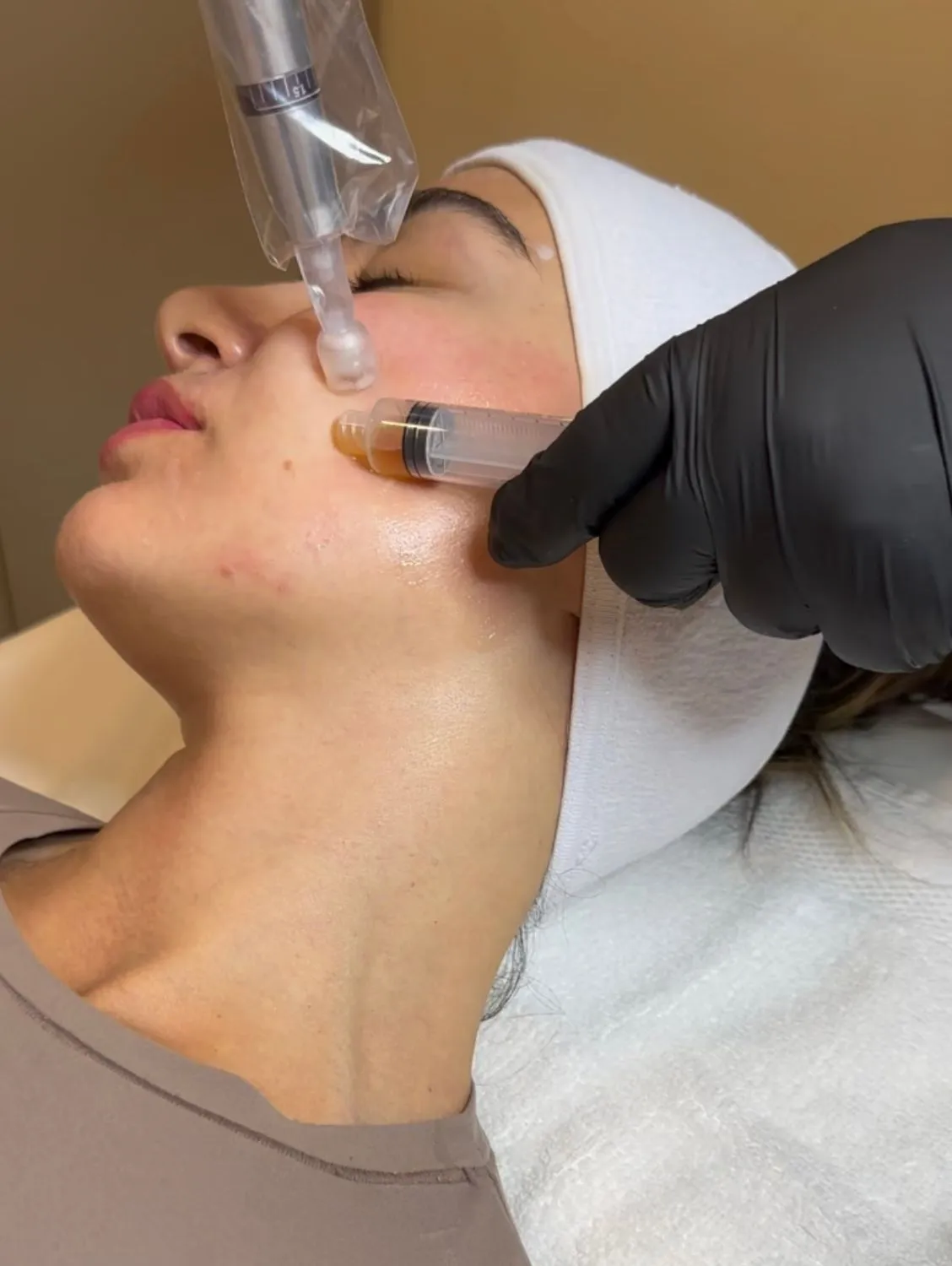
At The Skinn Suite, microneedling in Burbank uses a medical-grade device to create precise micro-channels in the skin, triggering your body’s natural healing response. That response produces new collagen and elastin, the proteins responsible for smooth, firm, even skin. It’s not a maintenance treatment. It’s a corrective one.
The depth of treatment is fully customized based on your skin concerns and type. For acne scarring, your provider may work at a deeper level than they would for general texture or pore refinement. Options like microneedling with PRP or exosomes can be added to accelerate healing and enhance results further.
Most patients need a series of 3–6 sessions spaced about 4 weeks apart, with improvements continuing to develop in the weeks after each treatment as collagen production ramps up.
For a comparison of how microneedling stacks up against other skin treatments, our post on PRP facial vs microneedling breaks down which option fits which goals.
Facials Still Have a RoleEven After You Add Microneedling
Upgrading to microneedling doesn’t mean retiring your facials. Many clients rotate both treatments using microneedling for deeper correction and facials to maintain results in between. Monthly facials support hydration, keep congestion at bay, and help your skin stay in the best possible condition to respond to more intensive treatments.
Think of facials as the foundation and microneedling as the intervention. Both serve a purpose, and together they cover more ground than either one alone.
How to Know You’re Ready to Make the Switch
You don’t need to wait until your skin is in bad shape to try microneedling. In fact, starting earlier tends to produce better results because collagen responds more readily in skin that’s already reasonably healthy. A good rule of thumb: if you’ve had at least 3–4 consistent facials and your primary concerns haven’t shifted, it’s worth having a conversation with your provider about whether microneedling makes sense for your next step.
At The Skinn Suite in Burbank, every microneedling plan starts with a thorough skin assessment to confirm it’s the right treatment for your current goalsnot a generic recommendation.